Quick Summary
An iaito is a blunt metal practice sword for iaido.
An iaito is a full-size, katana-style practice sword with no cutting edge, made for iaido. Most iaito are an aluminum-zinc alloy, though some are steel. A typical alloy iaito weighs about 820 g (1.8 lb), lighter than a real katana. Iaido students are the main users of an iaito, along with collectors and martial artists. This guide covers how an iaito compares with a katana and a bokken, and how to choose one.
You see the word iaito in sword shops, dojo websites, and forum threads, and it often gets mixed up with katana. A beginner can reasonably ask whether an iaito is a toy, a training tool, or the real thing. The short answer is that an iaito is a real, full-size practice sword with one important change: no cutting edge.
This guide explains what an iaito is, how it differs from a katana, what each one is made of, and who should buy one. By the end, you will know how to choose the right sword for your practice, your budget, and your space.
What is an iaito?
An iaito is a modern metal practice sword with a blunt edge, made mainly for iaido. Iaido is a Japanese martial art built around drawing the sword and responding to a sudden attack. Nearly all practice is solo kata against an imaginary opponent, with no sparring.
The first iaito appeared after World War II. They gave people a way to own a training sword for modern budo without paying for a handmade blade. Today it is the standard tool in most iaido schools, and the typical student trains with one for years.
About 820 g
is the typical weight of an alloy iaito (1.8 lb), compared with about 1,200 g (2.6 lb) for a real katana without its scabbard.
How is an iaito different from a katana?
The biggest difference between an iaito and a katana is the edge. A real katana, called a shinken in iaido, is sharp. It has a blunt edge and tip, and it is not built for sword-to-sword contact. It looks like a katana and is made to feel like one in the hands, but it is a practice tool first.
The second difference is weight. A real katana weighs about 1,200 g (2.6 lb) without a scabbard, while a typical alloy iaito weighs about 820 g (1.8 lb). A steel iaito falls in between, at roughly 900 to 950 g (2.0 to 2.1 lb). The lighter sword is easier on the wrists during long sessions, though some students feel the difference when they move to a heavier blade later.
The third difference is price and upkeep. It costs far less than a handmade blade, and it asks for less care. If you want to know more about how a real katana is defined, our guide to tachi vs katana covers the basics.
| Feature | Iaito | Katana (shinken) | Bokken |
|---|---|---|---|
| Edge | Blunt, no cutting edge | Sharp | None, wood |
| Typical material | Aluminum-zinc alloy or steel | Steel | Hardwood such as oak |
| Typical weight | About 820 g alloy, 900 to 950 g steel | About 1,200 g | Varies |
| Main use | Solo iaido kata | Advanced practice and cutting | Partner kata and suburi |
What is an iaito made of?
Most iaito are made of an aluminum-zinc alloy. Alloy keeps the cost down and the weight lower, and it makes the sword easier to buy. Some iaito are made of steel, which gives a heavier, more realistic feel.
Fittings are often close to a real katana. A good one has a similar length and curve, a hamon-style line on the blade, and a handle wrapped like a traditional sword. That is why it can look almost identical to a katana on a stand.
It is worth knowing that a decorative imitation is not an iaito. A true iaito is built to be swung and drawn thousands of times. A wall-hanger with a loose handle may look like a katana, but it is not safe to practice with.
Is an iaito sharp?
No. An iaito has a blunt edge. That is the point: you can practice drawing, cutting motions, and putting the sword away without the risk of a sharp edge. It does not mean the sword is harmless, because the metal still has weight and a point, so treat it with care.
Blunt also helps with the law. Japan passed a law in 1958 that bans possessing, making, or importing sharpened or sharpenable swords, and the alloy iaito sidesteps that rule. Laws in other countries differ, so check yours, and see our guide on whether metal replica swords are legal in the US if you live there.
An iaito is a tool for practice, not for cutting.
Iaido itself goes back to the mid-1500s, and Hayashizaki Jinsuke Shigenobu (1542 to 1621) is generally credited as the person who organized it. The word iaido first appeared in 1932 and was popularized by Nakayama Hakudo. Iai comes from a phrase about staying ready and meeting an opponent at once.
In 1969, the All Japan Kendo Federation created a standard set of twelve kata, called Seitei Iai. It is used for teaching, promotion, and exams, which makes it the most widely practiced form in Japan and abroad. Almost every one of those students trains with an iaito.
Who needs an iaito?
Anyone who studies iaido will likely use an iaito at some point. Most people in the art practice with one, and few experienced students use a sharp shinken. Beginners may start with a wooden bokken, then move to an iaito once the school thinks they are ready.
Not every dojo agrees on that path. Some teachers want a new student to buy one right away, and others prefer to wait. Before buying, ask your instructor what they recommend, since some schools have rules about length and fittings.
- Iaido students. A new student whose teacher recommends an iaito for solo kata.
- Martial artists in related arts. People who want a blunt sword for drawing and cutting-motion drills.
- Collectors. Buyers who want a full-size, katana-style piece without a sharp edge.
- Performers and instructors. People who need a lifelike sword for demos and who want to avoid a live blade.
What is the difference between iaito vs katana vs bokken?
The iaito vs katana question comes down to the edge, and the iaito vs bokken question comes down to feel. A bokken is a wooden sword, usually shaped like a katana. A tachi-sized bokken is about 102 cm (40 in) long. It is great for partner kata and for getting used to a sword's feel, but it does not teach drawing from a scabbard.
An iaito does teach drawing. Because it comes with a scabbard, it lets you practice the draw, the cut, and the return. That is the heart of iaido, and it is why the iaito is the better pick for solo practice. Partner kata, though, usually use a bokken for safety.
For a beginner, the iaito vs katana choice is usually simple. The blunt sword costs less, it is safer, and it lets you build habits before you move to a heavier blade.
How do you choose a good iaito?
Start with the length. A katana blade is generally defined as longer than about 60.6 cm (23.9 in), and common katana blades run about 60 to 80 cm (24 to 31 in). The sword should fit your height and reach, so your teacher is the best person to ask.
Next, check the balance and the fit of the handle. A well-made one should feel stable when you draw it, and the blade should not rattle in the handle. Weight matters, too, since a lighter alloy sword suits long sessions and a heavier steel one feels closer to a real katana.
If you are shopping with us, a few katanas and wakizashi in the katana collection are listed as unsharpened iaito training swords. These are steel. Read the listing for each iaito before you buy, and confirm with your instructor that it meets your school's needs.
How do you care for an iaito?
Caring for an iaito is simple. Wipe the blade with a soft cloth after handling, keep it dry, and store it in its scabbard or on a stand. Steel blades benefit from a light coat of oil, and alloy blades also appreciate a clean wipe.
Check the handle often, since the handle takes the most wear. A loose handle is a safety problem for any practice sword, so tighten or replace parts when you notice play. Our guide to cleaning and maintaining a metal katana has a step-by-step routine you can adapt to an iaito.
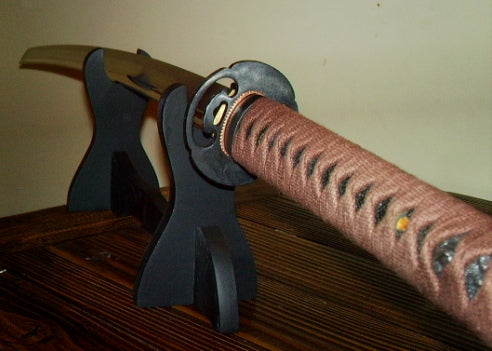
When you are not practicing, a good stand keeps the iaito safe and looks great. See our guide to displaying sword replicas safely for stand and mount tips.
The iaito is the right tool for learning the sword
An iaito gives you the length, the curve, and the draw of a katana without the danger of a sharp edge. That is why most students use one, and why it is a smart first buy for anyone serious about iaido. Pick a sword that fits your body, your budget, and your teacher's advice, and you will have a practice partner for years.
Frequently Asked Questions
What is an iaito?
An iaito is a modern blunt metal practice sword used mainly for iaido. It looks and handles like a katana but has no cutting edge, which makes an iaito safer for solo drawing and cutting practice.
Is an iaito the same as a katana?
No. A katana is a sharp Japanese sword, while an iaito is a blunt practice version. The iaito vs katana difference comes down to the edge, the weight, and the materials, since an iaito is often made of alloy.
Is an iaito sharp?
No. An iaito has a blunt edge and tip. It is still a heavy piece of metal, so treat it with care and use it under the guidance of a qualified teacher.
What is an iaido practice sword made of?
Most iaido practice swords are made of an aluminum-zinc alloy, which keeps the weight and cost down. Some iaito are steel, and these feel heavier and closer to a real katana.
Can a beginner use an iaito?
Yes. It is a common choice for beginners in iaido, though some teachers start students with a wooden bokken first. Ask your instructor before you buy.
How heavy is an iaito?
A typical alloy iaito weighs about 820 g (1.8 lb), and a steel iaito weighs about 900 to 950 g (2.0 to 2.1 lb). A real katana is heavier, at about 1,200 g (2.6 lb) without its scabbard.
How do I care for an iaito?
Wipe the iaito with a soft cloth after use, keep it dry, and store it in its scabbard or on a stand. Check the handle often, and oil steel blades lightly to prevent rust.
Find your practice sword
Browse katanas, including a few listed as unsharpened iaito training swords.
Shop the Collection