Quick Summary
A tanto is a Japanese knife with a blade under about 30 cm (12 inches).
The tanto is a traditional Japanese knife that samurai carried at the waist or hid in their robes. A tanto blade is under one shaku, about 30.3 cm (12 inches), and most have a flat-sided hira-zukuri shape. The Japanese tanto appeared in the Heian period, was refined in the Kamakura period, and later gave way to the wakizashi. The squared-off tanto on modern tactical knives is a different design.
You may have seen the word tanto on a pocket knife, a movie prop, or a collector's shelf. The name is used for several different things, and most of them have little to do with the original Japanese tanto.
This guide covers what a tanto knife really is, how long a tanto blade runs, the main blade types, and how the tanto was used by samurai. By the end, you will know how to tell a Japanese tanto from a modern look-alike.
What is a tanto?
A tanto is a traditional Japanese knife, carried by the samurai class. It is a single- or double-edged dagger built mainly for stabbing, though the edge can also slash. The tanto belongs to the family of traditionally made Japanese blades known as nihonto, and it is the shortest of the group.
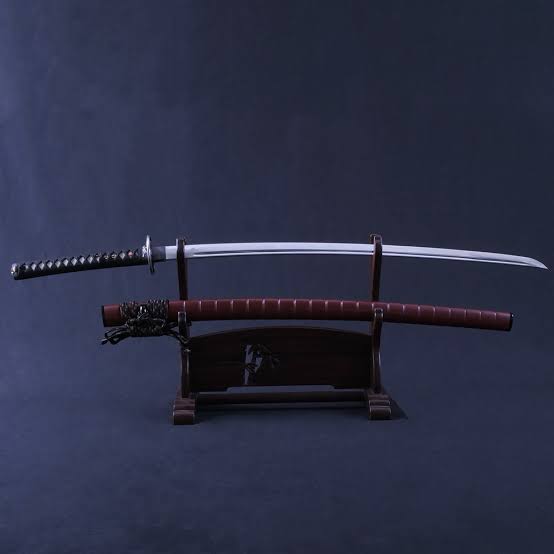
The blade is forged and polished much like a katana. It has a curved or straight profile, a tang that fits into the handle, and a mounting called a koshirae. If you picture a katana shrunk down to knife size, you are close, but it has its own shapes and its own history.
Tanto knife versus tanto sword
People search for both "tanto knife" and "tanto sword," and the two terms point to the same thing. Because it is so short, many collectors call it a knife or a dagger. Others call it a short sword because it is a full nihonto with a signed tang. Either label works as long as you are talking about the Japanese tanto.
How long is a tanto blade?
A traditional tanto blade is under one shaku, which is about 30.3 cm (a little under 12 inches). Most references give a general range of about 15 to 30 cm (6 to 12 inches). A typical blade is about 25 cm (10 inches) long, roughly 17 mm (0.7 inch) wide near the tang, and about 8 mm (0.3 inch) thick.
Some tanto run longer. A tanto that goes past one shaku is called an o-tanto or sunobi tanto, and during the Nanboku-cho period they reached around 40 cm (16 inches), turning into what one source calls miniature wakizashi. At the other end, very short tanto under five sun, about 15 cm (6 inches), were carried as concealed daggers.
30.3 cm
A traditional tanto blade is under one shaku, which is about 30.3 cm or just under 12 inches.
Where did the tanto come from?
The tanto appeared during the Heian period (794 to 1185) as a mostly practical weapon, which is why few fine examples from that era survive. Over the next few centuries, it went from a plain tool to an art form and then back to a ceremonial object. The table below follows the main turning points.
| Period | What happened to the tanto |
|---|---|
| Heian (794 to 1185) | The tanto appears as a functional weapon. Few high-quality examples survive. |
| Kamakura (1185 to 1333) | Top smiths begin making refined tanto, especially in the Soshu tradition. Production rises after the Mongol invasion attempts in the late 13th century. |
| Nanboku-cho | Blades grow longer and wider, reaching about 40 cm (16 inches). |
| Muromachi (1336 to 1573) | Constant warfare leads to mass production. Average quality drops, but custom blades stay excellent. |
| Momoyama to early Edo | The katana and wakizashi replace the tachi and tanto as the main pair. Few tanto are forged. |
| Late Edo to Meiji | Smiths such as Suishinshi Masahide revive older styles. An 1876 ban on wearing swords ends the tanto's practical role. |
There is one detail worth knowing. Before the Muromachi period, the word katana often referred to a tanto. That tells you how common the short blade was in daily life. To see how the longer blades developed, read our comparison of tachi and katana.
What are the main tanto blade types?
Tanto blades are grouped by their cross-section and shape, a style called zukuri. Most are hira-zukuri, meaning a flat-sided blade with no ridge line. This was the dominant form before the Muromachi period, and it is still the most common today.
| Blade type | Shape | Where you see it |
|---|---|---|
| Hira-zukuri | Flat sides, no ridge line | The most common tanto blade shape. |
| Hochogata | Short, wide, hira-style blade | Favored by the smith Masamune. |
| Unokubi | Back thins mid-blade, with a short groove | Appears in the late Kamakura period. |
| Shobu-zukuri | Like a katana blade, but without a yokote | Common in the mid-Muromachi period. |
| Moroha | Double-edged, with a diamond cross-section | Rare. |
| Kanmuri-otoshi | Back sharpened from about halfway to the tip | Mid-Kamakura Yamato and Yamashiro schools. |
| Yoroi-doshi | Very thick cross-section | Built to pierce armor. |
| Katakiriha | Sharpened on one side, chisel-shaped | Appears in the late Kamakura period. |
A few forms are rare enough that you may never see one. Kissaki-moroha has a double-edged point, and the famous Kogarasu Maru is an example. Kubikiri has its edge on the inside curve and no sharp point, and its purpose is debated. A myth says attendants used it to behead fallen enemies, while other ideas include cutting incense or pruning bonsai.
How was a tanto worn and used?
This short blade served several jobs. Samurai wore it at the waist as a companion to the tachi, and when wearing armor a tanto paired with a tachi was called a sashizoe. Small ones were also hidden in robes, and those were known as futokoro katana. The short blade was easy to conceal, which later made it attractive to the yakuza in the 20th century.
Mounting style tells you how a tanto was meant to be carried. The aikuchi style has no handguard, and the metal collar sits flush with the mouth of the scabbard. The hamidashi style adds a small guard. Most worn at the waist used aikuchi fittings.
Kaiken and women
The kaiken is a short version, often in aikuchi or plain wood mounts, and women carried it in the obi for self-defense indoors. It was also a common wedding gift. A few other special types exist, such as the fan tanto hidden in a fan-shaped scabbard.
The ceremonial side
The blade also has a ceremonial role. It was used in the seppuku ritual, and imperial court members again wore a tachi and tanto in the Meiji era. After the 1876 ban, makers produced tanto for ceremonies, gifts, and export souvenirs.
How does a tanto differ from a wakizashi and a katana?
The difference is mostly length and role. A katana is the long sword, a wakizashi is a mid-length companion, and the tanto is the shortest. In the early days, the tachi was paired with a tanto. Later, the katana was paired with a shorter sword, and the wakizashi became the preferred partner.
Historians suggest the wakizashi won out because it suited indoor life. Samurai left the katana at a castle door but kept the wakizashi on. A tanto sometimes replaced the wakizashi in the pair known as a daisho, especially on the battlefield.
The tanto sat closest to the body, which made it the sword that was always within reach.
The tanto sat closest to the body, which made it the sword that was always within reach. That is a fair summary of why it lasted from the Heian period into modern ceremony. If you like short blades, browse the mini katana replicas at the shorter end of the range.
Is a Japanese tanto the same as a tactical tanto knife?
No. Since the 1980s, "tanto" in the West often means a modern tactical knife with a squared-off point. That point style does not appear on traditional tanto. The real thing has a gently curved or sloping tip.
The two also differ in purpose. A modern tactical tanto is a tool built for toughness at the tip. A Japanese tanto is a signed, polished blade with a long tradition. Training versions come in blunt wood, plastic, or metal for martial arts practice.
How do you choose, display, and care for a tanto replica?
Start with the purpose. A display piece can be a dull replica, while a battle-ready one is built for hands-on use. Our guide on what a dull replica means explains the difference.
Check local rules before you buy, and use our overview of replica sword laws in the US if you are unsure.
Sword Slice carries a Ghost of Tsushima katana and tanto set in a battle-ready build, along with a table stand made for a tanto and a dagger. You can see more game blades in the game sword replicas collection.
For smaller blades, the dagger collection is the place to start.
Care is simple. Keep the blade in a cool, dry spot away from sun and humidity, and use a wooden stand because bare metal can scratch the steel. Wipe the blade gently from the handle toward the tip with a soft cloth, and add a thin coat of oil every few months, more often in humid climates. Avoid abrasives and harsh chemicals.
The tanto is small, but it earned its place in Japanese history
From a Heian-period weapon to a Kamakura masterpiece to a Meiji-era ceremonial blade, it has been part of Japanese swordmaking for roughly a thousand years. Know the length, the blade types, and the difference from a modern tactical knife, and you can read any tanto with confidence.
Frequently Asked Questions
What is a tanto?
A tanto is a traditional Japanese knife carried by the samurai class. It has a blade under one shaku, about 30 cm or 12 inches, and was built mainly for stabbing. It is the shortest of the traditional Japanese blades.
How long is a tanto blade?
A traditional tanto blade is under about 30.3 cm (12 inches), with most falling between 15 and 30 cm (6 to 12 inches). Longer ones, called o-tanto or sunobi tanto, can reach about 40 cm (16 inches).
Is a tanto a knife or a sword?
Both labels are used. It is a knife in size, but it is also a full nihonto with a forged and polished blade, so many collectors call it a short sword or dagger. Either way, a Japanese tanto is not the same thing as a modern tactical tanto knife.
Can a tanto be used for everyday carry or self-defense?
Historically, yes. Samurai wore it at the waist, small ones were hidden in robes, and women carried a kaiken for self-defense indoors. Today, laws on carrying blades vary by state and city, so check local rules before you carry one.
How do you clean and maintain a tanto?
Keep it in a cool, dry place, wipe it with a soft cloth from the handle toward the tip, and add a thin coat of oil every few months. Avoid abrasives, harsh chemicals, and bare metal stands that can scratch the blade.
Is a tanto good for beginners to collect?
Yes. A tanto is small, easy to display, and easier to handle than a full-length katana. A dull replica is the safest way to start, and it takes less wall or shelf space.
What sizes and styles are available for a tanto?
Tanto replicas come in different lengths, blade shapes, and mounting styles, such as aikuchi with no handguard. Some are sold in sets with a katana, and some are mini versions for display. Check the listing for blade length and whether the edge is dull or sharp.
Add a tanto to your collection
Browse daggers and short blades that follow the look of the Japanese tanto.
Shop the CollectionSources
| Source | Article |
|---|---|
| Wikipedia | Tanto |
| Nihonto.com | The Tanto |
| Japanese Sword Index | Tanto |
| Wikipedia | Daisho |
| Japanese Sword | Explore the Beauty of Hamon on Japanese Swords: A Collector's Guide |